Monday, 23 July 2012

The Recession 2: What Osborne Should Do

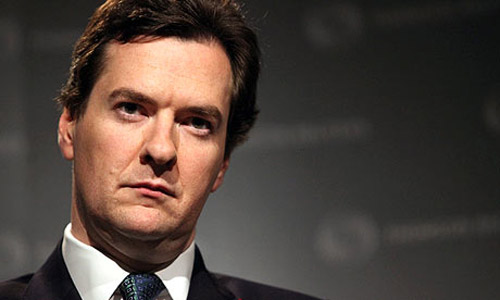
Our once esteemed Chancellor George Osborne, whose highly anticipated 2012 budget collapsed in a smouldering heap weeks after its delivery, a man who has been described by his own MPs as an ‘arrogant posh boy,' must be wondering what lies at stake for him for the future in public office and in his political career. 

His current part-time role as Chancellor, and stated objective of economic growth, has been a dismal failure. The extremely modest deficit reduction achieved so far has occurred mainly through stealthy tax hikes and his extreme monetary easing policies are doing nothing but storing up inflation and anger for the future.

His opponents on the other side of the commons can offer no better. Labour’s answer is, as usual, a call for more Gordon Brownesque demand side Keynesianism, more borrowing, more stimulus, and an avoidance of the real problems for a braver leader of the future. 


This two part series argues that the ‘austerity vs growth’ debate of recent months is disingenuous and misleading. The first part focused on the austerity side of the debate, and gave examples of how deficit reduction can be achieved without it. This second part focuses on growth, a word which has been hijacked by Labour in recent times to mean ‘more spending,’ and a concept that continues to elude Mr Osborne.

In order for Osborne to keep his office at the Treasury, he will probably have to give up his role as Tory election campaigner and will almost certainly have to change his economic strategy in some regard.

What the country needs is real plan for growth. A strategy that will actually makes it easier for people to trade and create jobs, but also a strategy that does not involve piling more debt onto our bankrupt government.

This post argues that growth can be achieved without spending excessively and can be done immediately with demonstrable results in as little as a few years.

Wednesday, 23 May 2012

Gay Marriage And The End Of Civilisation


A few weeks ago, Barack Obama came out in favour of gay marriage (pardon the pun), and Mitt Romney, likely to be his challenger in the 2012 Presidential election, opposed him.

The way this whole debate has been defined is unsettling. Obama defines it to be about gay people and their rights, and in this speech he gives a touching personal account of why he believes what he believes. Romney, on the other hand, comprehends this debate in an entirely different way, and states his position on the subject without once mentioning the word gay or homosexual.

In the UK, the issue has also been presented to the public as a debate about ‘equality’ and the ‘rights’ of gay people. However, when one strips the subject down to the facts, and peels away all the political doublespeak, it becomes clearer that the whole debate has little to do with gay people, and everything to do with religion, particularly in this case - Christianity.

Thursday, 10 May 2012

The Recession 1: Too Far Too Fast

Since the UK governing coalition was formed in 2010, the economical debate has centred around less spending VS more spending.

One side of the commons wants controlled austerity, whereas the other wants to keep borrowing to boost growth while risking the loss of our credit rating, which could lead to emergency austerity (and/or inflation), as currently being experienced by Spain, Italy, Ireland and Portugal.

Nobody likes cuts. Taxpayers in the private sector who have paid into the social system all their working lives, now find out that the services they have paid for will be cut, and public sector workers are hit with a combination of job losses, pay freezes and reduced pensions.

So far the debate has been presented to the public as a straight choice between the Coalition cuts agenda and the Labour anti-cuts agenda. But is there a secret third option? Is there really no way of balancing the budget without austerity measures.

This blog argues that it is possible to balance the budget without austerity and it is possible to boost growth without excessive spending.

Tuesday, 8 May 2012

The New Fascism And The Big Taboo

The inspiration for this post comes from a quote allegedly spoken by Winton Churchill – the fascism of the future will come under the banner of anti-fascism. 

The phrase was used by Tommy Robinson, the lead spokesman for the English Defence League (EDL) - an anti-Islam protest group, on a recent BBC debate show. He used the phrase in response to a comment about the violent behaviour of ‘anti-fascism’ protestors. Whether or not Churchill actually said this quote is unclear, but it is known that he made a public statement criticising Islam. 

The debate on The Big Questions was: Are we too complacent about the far right? (video below)

This post discusses the meaning of the word 'complacent' in this question, and if we, as a country, are taking the right approach to this problem.

Monday, 2 April 2012

The Fear Of Nationalism And The Price Of Socialism

These past few years have seen huge increases in the size and scope of government.

The amount of government spending continues to rise and more rises are forecast for the future (page 86 here) yet our domestic services are under austerity; the demands of government have increased to give us masses of new rules and regulations; the state intervenes in our day to day lives on a massive scale, and many local decisions are overridden by distant authorities.

These trends have been accompanied with rising social tensions at home and in foreign relations around the world.

Living standards are coming down and people are looking for others to blame. Social and racial tensions are on the rise. Rioting took place on a massive scale in London and Athens and other several other European cities last year. The last few years have seen the appearance of anti-Islamisation marches, home grown terrorists, and twice as many people voting for fascist parties. Tensions have risen between various European nations and between the west and the east, most notably with Iran.

What forces can we attribute to our nation’s shift towards ever more government? And should we be worried?

Is the civil unrest on our streets and our lack of social cohesion a result of this political move to the left? What can we learn from history?

What changes do we need to make, as a country, in order to unite our people and preserve the peace? Could it already be too late?

Sunday, 1 April 2012

Why George Galloway’s Win Is Good For Politics


Congratulations to George Galloway for securing a huge victory in the Bradford West by-election; he is an inspiring speaker and a dedicated campaigner. This post talks briefly about what it is he stands for and why his election may have a positive impact in British politics.

Sunday, 25 March 2012

Honour And The BBC

A recent BBC Panorama programme about ‘honour killing’ in the UK, focused on murders committed in order to avenge ashamed families or in order to prevent further shame being brought upon them. Below is a link to the video.

Throughout the programme the narrator fails to mention that this phenomenon is almost exclusively from the Muslim community.Even when the news report was published here on the BBC, the article does not once use the word ‘Islam’ or ‘Muslim’. 

In some Islamic countries, what we call 'honour killings' are actually legal, and in many homes in the UK, women are oppressed, forced to dress and behave in certain ways, or even imprisoned or physically abused, in order to uphold these same religious laws. 

Tuesday, 20 March 2012

Democracy In The 21st Century 2: Radical Optimism

The internet has transformed the way we talk, the way we message, the way we learn, the way we shop, and the way we do business, and it will change many more things in our lifetime.


The internet provides an abundance of choice and complete freedom of communication –
the ability to contact anyone in the world at any time at no cost.

Anyone with a computer can talk, buy, sell, and bank online with whomever they please. Everyone has access and instant choice between different vendors and different currencies at the click of a button. Anyone can create an online business and do business with people on the other side of the globe. Anyone can create online friendships and meet like-minded people, formulate groups and networks and consolidate public opinion. Anyone can create a web page and get their message heard; anyone with a camera phone can be a journalist; anyone can create a cause, a forum, a network, a movement, and make real changes. In other words, the internet enables real democracy.

Many say the West is in decline, but be best not to let these people scare you. Our belief in freedom, self determination and capitalism has given us a culture of creativity and innovation. This entrepreneurial nature, combined with the digital technology boom, will ensure that it is the west that pioneers the continued development of the free peoples of this planet; but we must be daring, and we must think positively.

There are ways of achieving more development AND more equality in our society, and they involve democratising certain public institutions in order to give equal rights to all who hold a stake in them. All of the issues that have led to the stagnation of the western economies can be solved with more democracy, and the internet makes this possible.

Monday, 5 March 2012

The Case For Withdrawal: Seven Economic Myths

Barroso and Van Rompuy
Our EU leaders are committed to ‘jobs and growth,’ they say. This comes as a suprising choice of words, knowing that the bulk of the EU government’s achievements, be them industry, environmental and labour market regulations, agricultural and fishing policies, subsidies and aid, and proposals for tax harmonisation, each serve to reduce competitiveness and entrepreneurship, and  stifle jobs and growth.

But they are not unintelligent people; just disillusioned. They have a genuine belief that political union between European nations will bring us prosperity, and have far too much invested in the project to see otherwise.

Here in the UK, there are also those that share this belief in progressivism, that the future will shun small unattached nations, and that by leaving the EU we would be economically disadvantaged. This post attempts to explain briefly why we should leave the EU, purely in economic terms, by dispelling some commonly held myths.

Tuesday, 28 February 2012

Going Through The Motions

Another referendum was announced today, much to the horror of the Brussels elite. As usual, such an event merits a special mention on Mighty Democracy.

Thursday, 16 February 2012

The Morals Of Capitalism

Capitalism has been the topic of much debate in recent times, and many disparaging remarks have caused politicians to call for all kinds of better capitalism, fairer capitalism, responsible capitalism and other such phrases. In order to put some sense and perspective to our current crisis it seems necessary to define capitalism and compare it to what we see in modern times in order to restore confidence in the word. 


Those who do not busy themselves with such definitions tend probably to have a negative reaction to the word capitalism. The USA is generally regarded as the most capitalist country on Earth and this is contrasted to Communism, previously embodied in Soviet Russia and now most famously in China. We read of how China has delivered the fastest ever period of economic growth and how the economies of the west are stagnating. Recession looms in the west and many begin to doubt capitalism as a system that delivers economic prosperity in a fair and sustainable manner. 

We have proven that capitalism works, economically that is, in that it is the most efficient way of fostering innovation and enriching a population with material wealth. All the great achievements in our history, in industry and technology, have come about not by government directed projects, but by individuals pursuing their own interests in a free society.

Critics of capitalism do not normally dispute this but instead tend to come at it from a moral standpoint, saying that the system does not deliver by some moral, ethical or spiritual measure, and that the inequalities it creates are not ‘fair.’ In order to understand why capitalism should be embraced, it is necessary to talk about what the word ‘fair’ actually means, and to understand that there has never been an alternative system proposed that adequately rewards everyone’s individual contribution to society.

Sunday, 5 February 2012

The Death Of Democracy

The clip below shows Jose Manuel Barroso - President of the European Commission, making his acceptance speech in Strasbourg in 2009. As president of the European Commission, Barroso is responsible for all legislation passed. He is the Prime Minister of Europe.


Here is the President of the European Council - Herman Van Rompuy, responding to a young student's question.


In the clips above, they both use the word 'democracy,' Barroso with reference to his appointment as the leader of the government of Europe, and Van Rompuy with a palpable distaste for the word. These men share a vision for Europe, and indeed the whole world, wherein power is centralised within a supranational authority, and nation states no longer have full control of their country's laws. They are extremely close to achieving their goal.

This post focuses on the goals of the European Union's current leadership and examines them in the context of democracy and freedom.

Sunday, 29 January 2012

Fear And Loathing In England

There are large Muslim populations living in western Europe (study from 2010), and numbers are rising, with especially large populations in France, the Netherlands, Belgium, Germany and the UK. 

The majority of Muslims in England are ‘westernised’ (for want of a better word) in that they enjoy living in a secular liberal society and participating in English culture. However, these days many that live within large Muslim communities do not become westernised; some groups are instead pulled back towards to the more ‘fundamental’ Islamic roots of their parents’ home country.

Although in no ways representative of the Islamic community as a whole, the anti-western sentiment being propagat
ed in England has taken root and continues to increase its influence. For some Muslims, this pull perhaps only influences minor attitudes in their way of life, like a young man giving up on drinking alcohol, or a young woman choosing to cover her head at all times. For others it becomes a more complete aversion to our liberal democracy and in some cases even a desire to commit violent crimes in the name of Islam. 

Saturday, 21 January 2012

The Case For Default: The Best Of The Bad


A default on sovereign debt within the Eurozone is widely considered to be the first domino of a violent chain reaction that would send a shockwave through the European banking system, triggering other sovereign defaults, a spate of financial sector nationalisation, and another world recession. It is seen as a cataclysmic event that must be avoided at all costs. 

However, the public have long ago woken up to the fact that these costs are to be borne not by those who made the foolish decisions to lend money to the untrustworthy governments and failing banks, as you would expect in a capitalist society, but instead by the hardworking majority, who are to be saddled with even more debt, taxes and decreased public services in order to prevent the default from ever happening.

Yes the politicians and corporations do run the show, but for those of us still privileged to live in a functioning democracy, our majority should be our saving grace. Peoples of Europe unite, and embrace default!

Thursday, 12 January 2012

Localism 4: The End Of The United Kingdom?

Now that the question of Scottish independence has reared its head, it seems apt to once again make the case for the dispersal of power.

As per usual this blog supports referendums, particularly on constitutional issues and the devolution of decision making. This post builds on the a series of previous posts about the concept of localism, that power should be devolved to the lowest practicable level, so that decisions are taken as closely as possible to the people they affect.

A greater degree of autonomy, and a more direct link between both citizens and their representatives and between taxation and expenditure, will revitalise Scottish democracy and give local people a greater sense of control and responsibility over their lives. If the Scottish people feel that their way of life differs significantly enough from the rest of the UK and that they would be freer as an independent state, they should go for it.

Thursday, 5 January 2012

Wee Little Englanders


Once upon a time the phrase Little Englander was used to describe English people with anti-imperialist opinions, those who perhaps thought it best that England keep to its jurisdictions within its borders in the UK, or indeed that it should be independent from its UK partners. In the days when the expansion of the British Empire was the will of the King, to be a Little Englander was to be weak, and unpatriotic. 

Nowadays, the meaning of the phrase has changed dramatically. It is now more commonly used by those on the left of the political spectrum to criticise those on the right who may have doubts about certain aspects of globalisation. With the EU debate at a current prominence, some say that Britain’s size and lack of industrial might makes us too insignificant to survive alone in a 21st century globalised world. These same people use the phrase ‘Little Englanders’ to express their anger and disdain of the current conservative government whose actions tend towards putting the interests of England before the interests of Europe as a whole. 

Friday, 23 December 2011

All The King’s Men 2: Diplomats

This is the second part in a series about the inherent ineffectiveness of certain government positions and the need to democratise their functions for the good of the country. The first part can be read here.

The decisions that emerge from diplomatic negotiations differ all too often from what the majority of people would have preferred if they had had their say. Imagine if the people had been consulted with regard to major foreign policy decisions in the past. Imagine if the British people themselves had decided whether or not Blair’s findings warranted an invasion of Iraq, for example. One could imagine a very different outcome. In fact generally speaking, almost any decision to initiate war stems from the concentration of power, and would be rejected by the majority. In most situations, people would rather we just minded our own business.
The vast majority of diplomatic duties, being negotiations about peacekeeping, business and trade links and energy deals, international treaties, foreign embassies, visas and tourism etc, are almost entirely in the hands of specialist ambassadors and their teams of diplomats.

Diplomats collect and report information about the foreign country in which they are posted and give advice to the home country on how best to set foreign policy. They are then tasked with conveying the views of their home country’s government, in the best way possible, so that the host country might act in ways that please the home country’s interests. Without a doubt, diplomats are highly trained and highly skilled individuals. Over many years they have honed their diplomatic style and long term strategy, and the combination of knowledge and experience gives them unique capabilities in their job that should by no means be belittled.

However, even with such highly respected ‘experts’ at the helm, much of our foreign policy even nowadays is contrary to common sense, and would be significantly different if the majority of people had their say in the matter. You don’t need to be a specialist in Persian studies to realise that trying to gently persuade the Ayatollahs into quitting Iran’s nuclear ambitions is a waste of time, though it took the government long enough to come to its senses. You don’t need to have done extensive research about Israeli and Palestinian relations to understand that if Israel is in the UN, then Palestine should be too, regardless of whether or not negotiations are ongoing or if conflict will continue, which it inevitably will. You don’t need to be a tri-lingual European historian nor a Colonial and Commonwealth specialist to realise that in today’s globally interlinked economy, Britain has closer ties with Canada, Australia and India than it does with Germany, Italy and Poland, and that spending a lot of time, money and effort on EU integration might just be a bit narrow-minded.

In fact, the high specialisation and specific expertise that these diplomats possess, and the fact that they spend so much time abroad and in the company of other diplomats, may actually impair their understanding of Britain’s true interests. Even in today’s twenty first century, with internet and TV allowing millions of people to take part in worldwide debates, our foreign policy is frequently misunderstood. So what changes need to be made to better align foreign policy decisions with public opinion?

Tuesday, 13 December 2011

The Case For Regulation: How To Tame The Banking Sector


Deregulation of the financial sector is widely accepted as one of the contributors to the recent banking crisis that reached a peak in 2008. The repeal of the Glass-Steagall Act in 1999 permitted the formation of one-stop super banks. Many institutions held and traded enormous portfolios of complex financial securities, the risks of which were not even sufficiently understood, let alone adequately provided for. During this time there was a degree of uncertainty between the FSA and the Bank of England over whose responsibility it was to regulate the banks. Things got out of hand. 

Then again, over-regulation was also a contributing factor. As explained in more detail in a previous article, the government’s involvement in the banking sector to guarantee deposits for individuals, and the central bank’s involvement as a lender of last resort, creates an environment which incentivises excessive lending and debt creation.

However o
ne weighs up the factors, it is generally accepted that the banking industry will always require regulation, or at least for some time to come, and many urge that strict rules should be put in place as soon as possible to prevent any of the calamities of the financial crisis from reoccurring. 

This article discusses the merits and limitations of the new bank regulations proposed in the UK and gives some thoughts about an alternative solution. 

Thursday, 8 December 2011

Uprising

All bore witness this year to the unstoppable power of the people. From the moment that Mohamed Bouazizi set himself ablaze in Tunisia last December, after protesting against police corruption and his personal mistreatment and denial of basic rights, a wave of unrest spread around the Arab world in attempts to bring about an end to their autocratic governments. Several other martyrs imitated Bouazizi’s act of self immolation. Many demonstrations escalated into violent rioting. Protest became full scale revolution. 

The rulers in Tunisia and Egypt were overthrown and a bloody civil war brought about the downfall of the regime in Libya. Sustained protests, civil disorder and governmental reform announcements have also taken place in various forms, and to varying degrees, in Syria, Yemen, Algeria, Morocco, Oman, Lebanon, Jordan and Kuwait.

Each and every country is unique, but the actions of the people involved were, on the whole, motivated through a desire to end human rights violations, government corruption, and the concentration of wealth and power among a small aristocracy. Most feel that this can be best achieved by replacing their longstanding dictatorships or absolute monarchies with a more democratic government.

The stalwart determination of the people in the Middle East, and the way in which the movement inspired neighbouring nations to break their silence and join the revolution, sent a message to the whole world, reminding us that the thirst for individual liberty and justice is shared by all mankind, and even under the most suppressive of regimes, the people will, in the end, rise up and demand that power be rebalanced to reflect the views of the majority. This message was followed by a joint response from the western nations, expressing solidarity and empathy for the revolutionaries and a unified international consensus that the unwanted dictators should either lead a transition to a more democratic rule, or get out of the way. We in the west went through these same struggles for freedom in around the 17th and 18th centuries, and many lives were sacrificed in order to establish a government for the people, by the people. 


Of course, every nation is different, and each will establish its own freedoms in its own way at its own pace. Such a move must ultimately come from the people who are directly involved, and not through international interference. Many peoples around the planet still seek the basic freedoms that we here in the west take for granted.

We can certainly say that democracy is much more popular than it was, say 300 years ago, and that the technology and ease of communication we have today makes it also much more feasible. However, democracy is not something that once attained is guaranteed. A wise man once said that ‘every genera
tion must wage a new war for freedom against new forces which seek through new devices to enslave mankind.’ We can but speculate as to where, when and in what form the next push for democracy will be. 

Wednesday, 23 November 2011

All The King’s Men 1: Economists

The government employs numerous highly qualified academics to assist in the most important financial decisions for the country. These people have spent their whole lives studying economics and work each and every day on sophisticated economic models and forecasts to analyse the nation’s finances, assess the domestic and international economic climate and predict the impact of the government’s policy decisions. Yet, so far, how successful have these economists been? The UK owes near to a trillion pounds for which we, the citizens, are the guarantors. The government continues to run a budget deficit each year and last year it was around 170 billion pounds. If the country was a single person, she would be maxing out a brand new credit card every year. If the country were a business, it would long have been declared bankrupt. So why have these so called ‘experts’ failed so miserably in running the country’s finances? And why have they not been sacked? 

This post is the first in a short series about the inability of government to perform certain tasks and why we urgently need to democratise certain government positions so that they might act more in line with our interests.