Showing posts with label Economics. Show all posts

Monday, 23 July 2012

The Recession 2: What Osborne Should Do

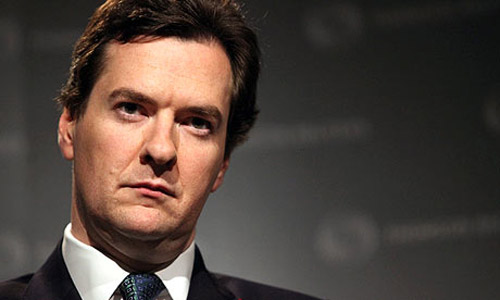
Our once esteemed Chancellor George Osborne, whose highly anticipated 2012 budget collapsed in a smouldering heap weeks after its delivery, a man who has been described by his own MPs as an ‘arrogant posh boy,' must be wondering what lies at stake for him for the future in public office and in his political career. 

His current part-time role as Chancellor, and stated objective of economic growth, has been a dismal failure. The extremely modest deficit reduction achieved so far has occurred mainly through stealthy tax hikes and his extreme monetary easing policies are doing nothing but storing up inflation and anger for the future.

His opponents on the other side of the commons can offer no better. Labour’s answer is, as usual, a call for more Gordon Brownesque demand side Keynesianism, more borrowing, more stimulus, and an avoidance of the real problems for a braver leader of the future. 


This two part series argues that the ‘austerity vs growth’ debate of recent months is disingenuous and misleading. The first part focused on the austerity side of the debate, and gave examples of how deficit reduction can be achieved without it. This second part focuses on growth, a word which has been hijacked by Labour in recent times to mean ‘more spending,’ and a concept that continues to elude Mr Osborne.

In order for Osborne to keep his office at the Treasury, he will probably have to give up his role as Tory election campaigner and will almost certainly have to change his economic strategy in some regard.

What the country needs is real plan for growth. A strategy that will actually makes it easier for people to trade and create jobs, but also a strategy that does not involve piling more debt onto our bankrupt government.

This post argues that growth can be achieved without spending excessively and can be done immediately with demonstrable results in as little as a few years.

Thursday, 10 May 2012

The Recession 1: Too Far Too Fast

Since the UK governing coalition was formed in 2010, the economical debate has centred around less spending VS more spending.

One side of the commons wants controlled austerity, whereas the other wants to keep borrowing to boost growth while risking the loss of our credit rating, which could lead to emergency austerity (and/or inflation), as currently being experienced by Spain, Italy, Ireland and Portugal.

Nobody likes cuts. Taxpayers in the private sector who have paid into the social system all their working lives, now find out that the services they have paid for will be cut, and public sector workers are hit with a combination of job losses, pay freezes and reduced pensions.

So far the debate has been presented to the public as a straight choice between the Coalition cuts agenda and the Labour anti-cuts agenda. But is there a secret third option? Is there really no way of balancing the budget without austerity measures.

This blog argues that it is possible to balance the budget without austerity and it is possible to boost growth without excessive spending.

Tuesday, 20 March 2012

Democracy In The 21st Century 2: Radical Optimism

The internet has transformed the way we talk, the way we message, the way we learn, the way we shop, and the way we do business, and it will change many more things in our lifetime.


The internet provides an abundance of choice and complete freedom of communication –
the ability to contact anyone in the world at any time at no cost.

Anyone with a computer can talk, buy, sell, and bank online with whomever they please. Everyone has access and instant choice between different vendors and different currencies at the click of a button. Anyone can create an online business and do business with people on the other side of the globe. Anyone can create online friendships and meet like-minded people, formulate groups and networks and consolidate public opinion. Anyone can create a web page and get their message heard; anyone with a camera phone can be a journalist; anyone can create a cause, a forum, a network, a movement, and make real changes. In other words, the internet enables real democracy.

Many say the West is in decline, but be best not to let these people scare you. Our belief in freedom, self determination and capitalism has given us a culture of creativity and innovation. This entrepreneurial nature, combined with the digital technology boom, will ensure that it is the west that pioneers the continued development of the free peoples of this planet; but we must be daring, and we must think positively.

There are ways of achieving more development AND more equality in our society, and they involve democratising certain public institutions in order to give equal rights to all who hold a stake in them. All of the issues that have led to the stagnation of the western economies can be solved with more democracy, and the internet makes this possible.

Monday, 5 March 2012

The Case For Withdrawal: Seven Economic Myths

Barroso and Van Rompuy
Our EU leaders are committed to ‘jobs and growth,’ they say. This comes as a suprising choice of words, knowing that the bulk of the EU government’s achievements, be them industry, environmental and labour market regulations, agricultural and fishing policies, subsidies and aid, and proposals for tax harmonisation, each serve to reduce competitiveness and entrepreneurship, and  stifle jobs and growth.

But they are not unintelligent people; just disillusioned. They have a genuine belief that political union between European nations will bring us prosperity, and have far too much invested in the project to see otherwise.

Here in the UK, there are also those that share this belief in progressivism, that the future will shun small unattached nations, and that by leaving the EU we would be economically disadvantaged. This post attempts to explain briefly why we should leave the EU, purely in economic terms, by dispelling some commonly held myths.

Thursday, 16 February 2012

The Morals Of Capitalism

Capitalism has been the topic of much debate in recent times, and many disparaging remarks have caused politicians to call for all kinds of better capitalism, fairer capitalism, responsible capitalism and other such phrases. In order to put some sense and perspective to our current crisis it seems necessary to define capitalism and compare it to what we see in modern times in order to restore confidence in the word. 


Those who do not busy themselves with such definitions tend probably to have a negative reaction to the word capitalism. The USA is generally regarded as the most capitalist country on Earth and this is contrasted to Communism, previously embodied in Soviet Russia and now most famously in China. We read of how China has delivered the fastest ever period of economic growth and how the economies of the west are stagnating. Recession looms in the west and many begin to doubt capitalism as a system that delivers economic prosperity in a fair and sustainable manner. 

We have proven that capitalism works, economically that is, in that it is the most efficient way of fostering innovation and enriching a population with material wealth. All the great achievements in our history, in industry and technology, have come about not by government directed projects, but by individuals pursuing their own interests in a free society.

Critics of capitalism do not normally dispute this but instead tend to come at it from a moral standpoint, saying that the system does not deliver by some moral, ethical or spiritual measure, and that the inequalities it creates are not ‘fair.’ In order to understand why capitalism should be embraced, it is necessary to talk about what the word ‘fair’ actually means, and to understand that there has never been an alternative system proposed that adequately rewards everyone’s individual contribution to society.

Saturday, 21 January 2012

The Case For Default: The Best Of The Bad


A default on sovereign debt within the Eurozone is widely considered to be the first domino of a violent chain reaction that would send a shockwave through the European banking system, triggering other sovereign defaults, a spate of financial sector nationalisation, and another world recession. It is seen as a cataclysmic event that must be avoided at all costs. 

However, the public have long ago woken up to the fact that these costs are to be borne not by those who made the foolish decisions to lend money to the untrustworthy governments and failing banks, as you would expect in a capitalist society, but instead by the hardworking majority, who are to be saddled with even more debt, taxes and decreased public services in order to prevent the default from ever happening.

Yes the politicians and corporations do run the show, but for those of us still privileged to live in a functioning democracy, our majority should be our saving grace. Peoples of Europe unite, and embrace default!

Tuesday, 13 December 2011

The Case For Regulation: How To Tame The Banking Sector


Deregulation of the financial sector is widely accepted as one of the contributors to the recent banking crisis that reached a peak in 2008. The repeal of the Glass-Steagall Act in 1999 permitted the formation of one-stop super banks. Many institutions held and traded enormous portfolios of complex financial securities, the risks of which were not even sufficiently understood, let alone adequately provided for. During this time there was a degree of uncertainty between the FSA and the Bank of England over whose responsibility it was to regulate the banks. Things got out of hand. 

Then again, over-regulation was also a contributing factor. As explained in more detail in a previous article, the government’s involvement in the banking sector to guarantee deposits for individuals, and the central bank’s involvement as a lender of last resort, creates an environment which incentivises excessive lending and debt creation.

However o
ne weighs up the factors, it is generally accepted that the banking industry will always require regulation, or at least for some time to come, and many urge that strict rules should be put in place as soon as possible to prevent any of the calamities of the financial crisis from reoccurring. 

This article discusses the merits and limitations of the new bank regulations proposed in the UK and gives some thoughts about an alternative solution. 

Wednesday, 23 November 2011

All The King’s Men 1: Economists

The government employs numerous highly qualified academics to assist in the most important financial decisions for the country. These people have spent their whole lives studying economics and work each and every day on sophisticated economic models and forecasts to analyse the nation’s finances, assess the domestic and international economic climate and predict the impact of the government’s policy decisions. Yet, so far, how successful have these economists been? The UK owes near to a trillion pounds for which we, the citizens, are the guarantors. The government continues to run a budget deficit each year and last year it was around 170 billion pounds. If the country was a single person, she would be maxing out a brand new credit card every year. If the country were a business, it would long have been declared bankrupt. So why have these so called ‘experts’ failed so miserably in running the country’s finances? And why have they not been sacked? 

This post is the first in a short series about the inability of government to perform certain tasks and why we urgently need to democratise certain government positions so that they might act more in line with our interests. 

Friday, 4 November 2011

Monopoly Money 3: Fear Of The Unknown

If you or I were to print money, we would be thrown in jail. Why? - Because it is against the law! But the reason it is against the law is presumably because it is unjust for people to increase their personal wealth in relation to other people, without earning it. Yet the government and the banks do it all the time. It goes without saying that this is not fair. So why do people not complain?

A state controlled currency is widely accepted simply because people don’t know any different. It is deemed to be the norm. Every country has a government with a central bank that is in charge of the money. There is an unspoken trust for the g
overnment to act in the best interests of the people, and to act competently. But unfortunately for the majority of us, this centralised control of our money provides the means and the incentive to abuse the currency in order to indulge in human desire and create short term unsustainable economic growth at the expense of increased inequality in society and an inevitable future economic downturn, that is, when the boom eventually becomes a bust. So what can we do about this?

This post is the last in a three part series about money. In the first part we spoke of the rapid expansion of the amount of money in the economy. The money supply is going up, and the value of our money is falling. This has been happening on a huge scale in the last 40 years since the fall of the Bretton-Woods agreement when the last link to gold
through the US dollar was severed. At this time an ounce of gold was agreed at $35, but since 1971 the price of an ounce of gold has soared, and peaked at $1900 in August of this year. The money that we use, however, buys nothing like what it did back in the day. The devaluation of our currency makes prices rise, and ordinary people bear the brunt. In the second part, we established that the root cause of economic discontent lies with the central bank, and hence with the government. We talked specifically about the system of fractional reserve banking and how it relies on confidence. If confidence was to be lost, everyone would attempt to withdraw their money from the bank and not everyone would get it back. We spoke of how the government and the banking sector are jointly involved in creating money. The Bank of England buys government bonds and other financial assets, using money created out of thin air, which in turn increases the money in the banks. The Bank of England also supports the creation of money and credit by the banks themselves in its role as the ‘lender of last resort’, which guarantees the credit worthiness of the banks so they can all compete by lowering rates in order to create and lend more money.

The sad truth is that so long as the management of our currency is left to government, it will continue to be debased at our expense. Depreciation of the value of our currency will continue indefinitely until one of two things happen - The government voluntarily changes its policy and embraces the subsequent recession, or continues in its money creating activities, artificially spurring growth until the economy becomes so reliant on monetary expansion to survive that the only possible outcome is total collapse of the fi
nancial system. Or is there a third option? Can we find a way to release our currency from its strict bounds and permit a free flowing stable monetary system, immune to the human forces that seek to manipulate it? In this post, I talk about the management of our national currency and some of the proposed solutions to break up this vast concentration of power.

Tuesday, 25 October 2011

Monopoly Money 2: Don’t Blame The Capitalists

This is the second post in a three part series on money. The first part can be read here

The recent Occupy protests have mainly targeted the banking sector. Demonstrators have held signs saying everything from: “Capitalism in cancer,” to “You got bailed out, we got sold out,” to “No bears, no bulls, just pigs,” get it?

Protesters have camped outside Wall St. and the London Stock Exchange etc, where many of the wrongdoers can be found. However, this isn’t where the root of the problem is. The protesters should really be outside the Federal Reserve or the Houses of Parliament and the Bank of England.

The blame for the economic instability and unfairness that people resent is being laid on capitalism, and when people think capitalism, they think banks. Although capitalism does
of course create inequalities and embraces greed as a positive driver of prosperity, it is not the enemy. Capitalism creates the wealth and jobs that we all want to see. It is the government’s involvement in the banking system that has entwined banking and politics and sown the seeds for yet another credit driven recession. 

In the first post we talked about how the central bank creates money through ‘quantitative easing’ and the reasons it gives for doing so. We asserted that inflation = people getting poorer, and I stand by this generalisation as being true for the vast majority. 


However, there are some groups of people who stand to benefit from the government’s money creation activity. In this post I talk about who these people are, how the government’s policies are designed to benefit them and hence why we are the 99%. 

Thursday, 20 October 2011

Monopoly Money 1: The Predicament

This is the first in a short series of posts about money. Each will contain a little bit of economic theory, but I hope for it all to be comprehendible for those that have not studied economics.

Despite thinking often about our finances, the system of money in our country is not something that most people really stop to think about. You get your wages, spend what you want to spend and save what you want to save. But how exactly did our current system of money come to be? Our entire way of life relies so heavily on its availability and its value, yet the people that control its production, issue and usage are a small number of powerful individuals. In this series I attempt to explain the dire need for our country to democratise the management of our currency and how, when it comes to the future management of our monetary system, the whole world could benefit from a little bit more open-mindedness.

Thursday, 6 October 2011

Daylight Robbery

The financial crisis of 2007/2008, aka the credit crunch, brought about some shocking events in the world banking industry. As I am sure you know, the housing bubble, inflated with the easy credit and the fashionable casino banking of the 21st century, burst spectacularly in 2007 resulting in plummeting values of real estate securities, a lack of liquidity for financial institutions, widespread evictions and foreclosures in the housing market, the collapse of huge financial institutions and, consequently, global economic recession. But we are still feeling these effects today. The banks still haven’t managed to shake off the bad debt and get back to doing healthy business. Why is that?

Tuesday, 20 September 2011

Our Glorious Leaders

Why vote? Does anyone trust these people that rule our world? They have made a bloody mess of things. The economy is in turmoil, again. But still these people cannot learn from their mistakes. It is pretty well established now that the problem is debt. As you are well aware, the world’s economies have been borrowing large amounts from each other to finance economic growth. Governments have borrowed to fund public spending on new state industry, infrastructure, administration, research and grand events. Banks have borrowed vast amounts from each other to finance their investments and lend on to other companies and entrepreneurs. Although this has contributed to much growth in the short term, quite visibly, it is not sustainable.